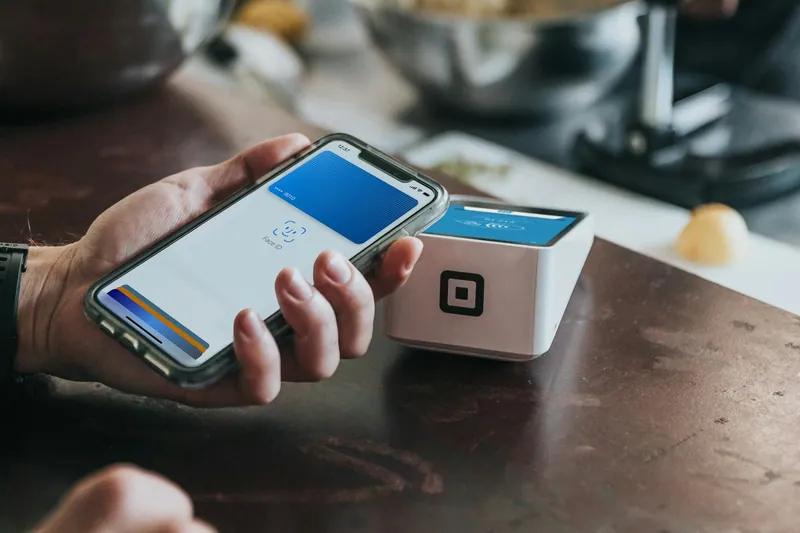
The short answer: not yet, and no date has been announced. As of 5 November 2026, Apple has said nothing about Apple Pay in Pakistan, Pakistan is absent from Apple’s list of markets where payment providers support Apple Pay, and neither the State Bank of Pakistan, 1LINK nor any bank has confirmed a launch. What changed in August and September is the evidence of preparation. For an online business, the useful question is not the launch date. It is whether your payment gateway and checkout can switch Apple Pay on quickly when it arrives, and which of your customers it will actually reach.
What is confirmed, and what is only reported
| When | Signal | Status |
|---|---|---|
| August 2026 | Pakistan-specific prices appear for Apple Music | Reported by TechJuice and Daily Pakistan |
| August to September 2026 | iOS 27 beta code names the PayPak network and a “PayPak card” | Reported by TechJuice and Daily Pakistan, not confirmed by Apple |
| 29 September 2026 | Users report an Apple Pay option in the HBL app; Standard Chartered, Bank Alfalah and UBL are said to be testing | Reported, with no confirmation from any bank |
| 29 September 2026 | Apple Pay launches in India with one bank | Confirmed |
| 5 November 2026 | Apple’s developer list of Apple Pay payment providers by country does not include Pakistan | Checked on Apple’s site |
PayPak is Pakistan’s domestic card scheme, run by 1LINK under the State Bank’s oversight. A network name in beta code shows that work is under way. It is not a commitment, a date or a list of participating banks, and every outlet that reported it says Apple has made no announcement.
What India’s launch tells Pakistani merchants
India is the closest precedent, and it went live on 29 September 2026. Axis Bank was the only launch partner, and only its eligible Visa and Mastercard cards could be added. RuPay, India’s own domestic card network, was not supported at launch, and neither was UPI, the instant payment system most Indians use. Other large banks held back over commercial terms, according to TechCrunch’s sources. Acceptance also depended on the merchant’s side: a payment could succeed at one terminal and fail at another, depending on whether that terminal’s acquiring bank had enabled Apple Pay. Online, acceptance came through the payment providers that had prepared for it, among them Razorpay, PayU, Cashfree and Juspay.
If Pakistan follows the same pattern, day one may cover a few banks and international card networks before PayPak, and a store will be ready only if its gateway is.
Who Apple Pay would reach in Pakistan
The State Bank’s payment systems review for 2025-26, released on 6 October 2026, shows where payments already happen:
- Digital is the norm. Of 14.3 billion retail payments through banking channels, 13.2 billion were digital, 92 percent of the total, up from 88 percent a year earlier. Mobile phone channels carried 11.1 billion of them.
- Cards are growing in shops. The point-of-sale network reached 337,791 terminals at 295,367 merchant locations, handling nearly 1.5 million card payments a day, up from 1.0 million.
- Online, accounts dominate. Account-based payments made up 96 percent of e-commerce transactions through banking channels, leaving 4 percent for cards and other methods.
- Banking lives on phones. Banks’ mobile apps had 30.4 million users, and branchless banking apps 99.1 million.
Apple Pay is a card wallet. In Pakistan it would make card payments faster for iPhone users, in shops and online, but it would not replace JazzCash, Easypaisa, Raast transfers or cash on delivery, which carry most online orders. Phone wallets are not new to Pakistani banks either: Google lists cards from twelve Pakistani banks and wallets, including HBL, Meezan Bank, UBL and Bank Alfalah, that can already be added to Google Wallet.
What Apple Pay asks of your website or app
Apple says most e-commerce platforms, including Shopify and WooCommerce, and most payment service providers support Apple Pay through their own integrations. On a platform, the Apple Pay button appears once your payment provider supports it in your market. In Pakistan, that means your gateway and acquiring bank adding support, and nothing a store can switch on alone today.
A custom-built checkout carries more of the work. Apple’s documentation sets out the setup:
- An Apple Developer account and a registered merchant ID, the identifier for your business as a merchant.
- A payment processing certificate, used to decrypt payment data, held by you or by your payment provider.
- A merchant identity certificate, required only for Apple Pay on the web, which authenticates your sessions with Apple’s servers.
- Every domain and subdomain that shows the Apple Pay button registered and verified. Apple states that these domains cannot sit behind a proxy or redirect and must be reachable by its servers.
- Renewals tracked: the merchant ID never expires, but both certificates and the domain verification do.
The same merchant ID and processing certificate can be used in iOS apps, so a business with both a website and an app sets up once.
Six steps to take before any launch
- Ask your gateway and acquiring bank. Will they support Apple Pay on your website, in your app and on your shop terminals when it launches, and on which networks: Visa, Mastercard, PayPak? Get the answer in writing.
- Measure your own mix. Pull the share of orders paid by card, wallet, bank transfer and cash on delivery, and the share of checkout sessions on iPhones. Together they show what Apple Pay could change for you.
- Check how your checkout domain is served. If it passes through a redirect or a proxy, plan with your developer how domain verification will work before you need it.
- Plan the button’s place in checkout. Decide where an express payment button sits and which details it can fill in, so a customer paying with a phone is not asked to type the same address twice.
- Keep every local method. Wallets, Raast and cash on delivery stay. Apple Pay is an addition for card holders, not a replacement.
- Prepare the first-day test. List one test transaction per participating bank and network, on the website, the app and a terminal, and report conversion by payment method from the first week.
Where SoftwareBiz fits. Our eCommerce development team configures payment gateways and express checkout on Shopify, WooCommerce and Magento stores, including Apple Pay domain verification where a provider supports it. For custom checkouts and mobile apps, our custom software development team builds the merchant validation and payment flow to Apple’s requirements, and our UI and UX design team reworks the checkout so a wallet payment takes one tap rather than a form. Stores that also sell into the UAE and Saudi Arabia do not have to wait: Apple’s list already names providers there, including Network International, Checkout.com, Telr and Tap.
What to do this week
Send your payment gateway one email asking whether it will support Apple Pay in Pakistan at launch, and on which networks. The answer tells you whether you will be ready on day one or after it. Checkout is changing in other ways too: our article on AI agents buying from Shopify stores covers the other new route into your checkout.